Lab-processed spore trap samples
Samples are submitted for professional microscopy analysis so you are not relying on a field guess.
Serving Laguna Hills, California & surrounding areas
Mon–Fri 8am–6pm · Sat 9am–2pm
Mold air sampling · Laguna Hills, CA
Get a clear, lab-backed picture of what is floating in your indoor air. We collect controlled spore-trap samples, document conditions that affect results, and explain what the lab findings mean for your home or building.
Evidence in the air
If you are searching for mold air sampling in Laguna Hills, you are usually trying to answer one practical question: is there an indoor air problem that a surface wipe or a quick look will miss? A properly run airborne mold spore test in Laguna Hills compares indoor samples to an outdoor reference sample, taken the same day, so the lab results have context.
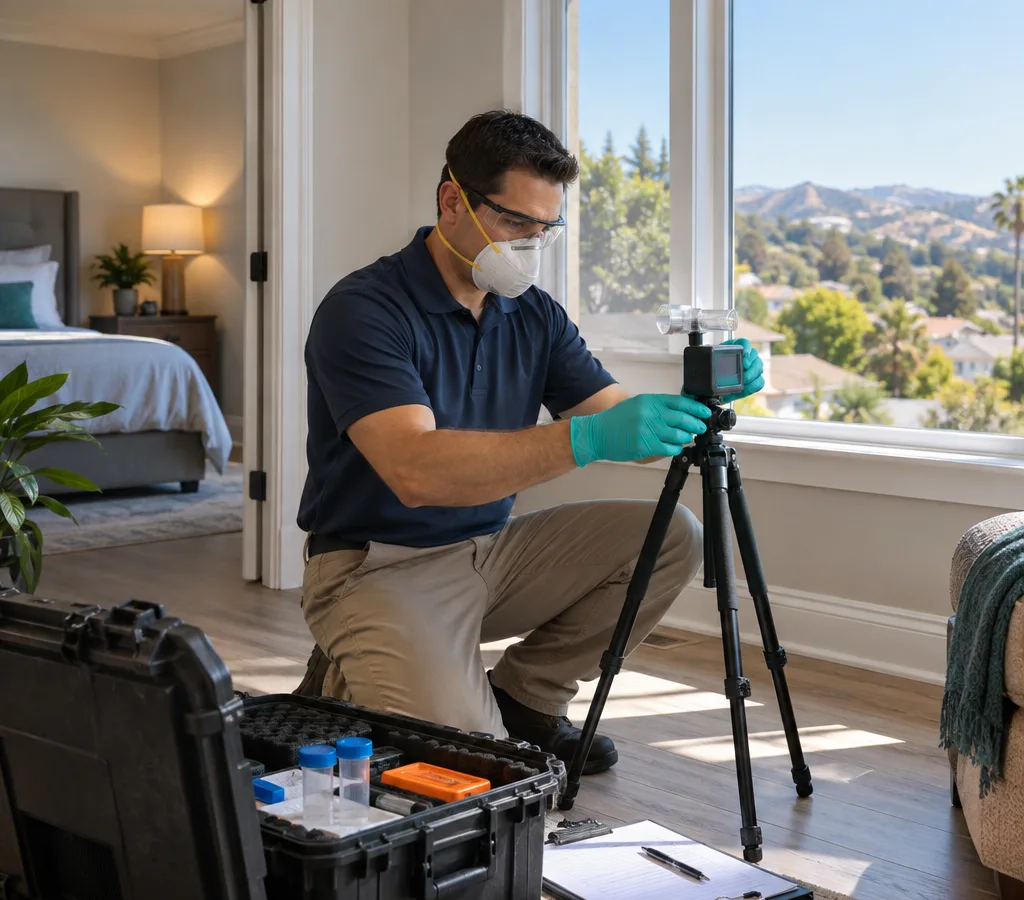
Laguna Hills Mold Testing focuses on scientific sampling discipline: stable flow rate, clean handling of spore trap cassettes, and notes that matter to interpretation—recent HVAC runtime, doors and windows, any air cleaners running, and obvious moisture indicators. You receive a written report with laboratory identification and spore counts, plus plain-English guidance on what the results suggest.
Many clients also start with broader Mold Testing Laguna Hills CA when they want a complete picture, including air plus targeted checks based on what we see on site.
Controlled collection
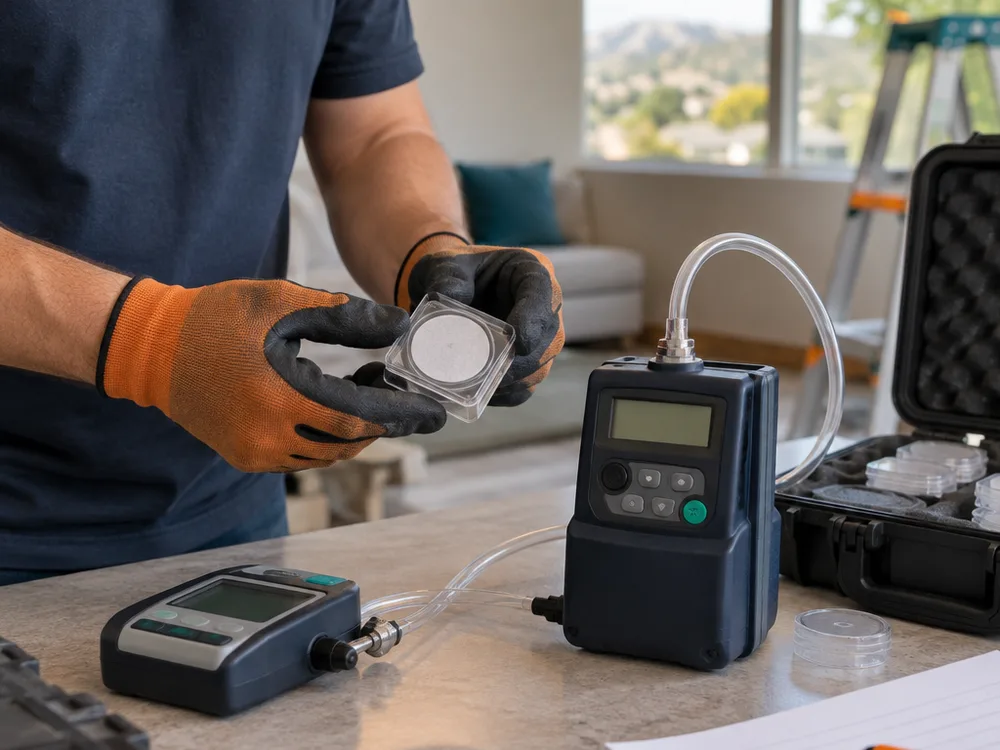
Spore trap testing in Laguna Hills uses a small cassette connected to a calibrated sampling pump. The pump draws a measured volume of air through the cassette over a fixed time so the lab can quantify spores and other particulates captured on the collection surface.
A useful air sample is controlled. We aim for representative locations—commonly a main living area and one or more concern areas—keep sampling height consistent, and avoid placement that distorts readings, such as directly under a supply register, next to an exterior door that is opening repeatedly, or in the immediate blast of a fan.
For interpretation, an outdoor control sample is critical because outdoor spore levels change by weather and time of day. When indoor totals and specific spore types are meaningfully higher than the outdoor baseline, or when water-indicator groups show up indoors in patterns that do not match outdoors, it supports an indoor amplification concern.
The lab analysis cannot tell you the exact source location by itself, but it gives strong direction for next steps.
Your testing deliverables
Samples are submitted for professional microscopy analysis so you are not relying on a field guess.
Outdoor reference sampling helps separate normal background spores from patterns that point to indoor amplification.
We record conditions that can skew results, including HVAC status, open windows, and active filtration devices.
You get a written report plus practical guidance on what the findings indicate and what to do next.
Air sampling supports decisions around occupant complaints, post-leak verification, or due diligence before buying or leasing.
From question to report
Each stage protects the quality of the sample and gives the laboratory findings the context needed for a useful interpretation.
We start by clarifying what you need the test to answer: health complaints, a musty odor, a recent water event, real estate due diligence, or checking a specific room.
We identify likely sampling locations and talk through anything that can affect results, including recent cleaning, portable HEPA units, open windows, or heavy HVAC cycling.
We label cassettes, set a controlled flow rate, and collect timed indoor samples plus at least one outdoor control sample when conditions allow.
Samples are handled as traceable specimens from collection through delivery to the laboratory for analysis.
You receive laboratory results with notes on what stands out, what is likely normal background, and what additional investigation may be warranted.
Pricing context
Mold air sampling in Laguna Hills typically ranges from about $250 to $650+ for an on-site visit with 2 to 3 spore trap samples, often including an outdoor control. Additional samples commonly cost $75 to $150 each. Complex situations such as larger homes, multiple concern areas, or time-sensitive real estate needs can increase the total.
Final pricing depends on how many areas you want tested, access to sampling locations, whether conditions require rescheduling for a valid outdoor baseline, and how quickly you need results. Exact cost is confirmed after we review your goals and sampling plan on site.
Air sampling is a good fit when you need objective data about exposure potential in occupied spaces. Examples include persistent allergy-like symptoms that improve away from the building, a musty odor with no visible growth, a past leak where materials look dry now, or pre-move-in due diligence.
Air testing has limits. If there is visible growth, the priority is to identify the moisture driver and control disturbance, not to “prove” mold exists. A single result can also mislead if a window was open, the HVAC just started, or an unusual pressure condition exists. That is why we document building conditions and may recommend targeted sampling to confirm what the air results suggest.
In coastal Orange County, indoor/outdoor air exchange and day-to-day weather shifts can change spore levels quickly. Comparing indoor samples to a same-day outdoor control keeps the interpretation grounded in what is normal for that moment.
Homeowner experiences
“We had a recurring musty smell and wanted data before doing anything expensive. The report explained the indoor vs. outdoor results clearly and helped us focus on the right area instead of guessing.”
“Needed spore trap testing during escrow. The sampling was quick, the paperwork was organized, and we understood what the lab numbers meant for our decision.”
Common homeowner questions
Most homes start with 2 indoor samples plus 1 outdoor control sample, then add more only if there are multiple distinct concern areas. For example, a musty downstairs room and an upstairs bedroom often warrant separate indoor samples because they can behave like different zones depending on HVAC and airflow.
Usually no, and in many cases we prefer the home to be in a normal living condition so results reflect typical exposure. We will note whether the system is running and avoid sampling directly at registers so the cassette is not reading a concentrated supply stream.
Open windows, strong fans, portable air cleaners, recent heavy cleaning or vacuuming, and unusual pressure differences can all skew results. We ask a few pre-test questions and document conditions on site so the lab numbers are interpreted with the right context.
Turnaround depends on the lab's current workload and the service level selected, but many spore trap analyses are returned within a few business days. If you are working with an escrow timeline, tell us up front so we can plan sampling and submission accordingly.
Air sampling indicates what is present in the breathing zone and whether indoor patterns differ from the outdoor baseline, but it does not pinpoint the source location by itself. When results suggest indoor amplification, the next step is targeted investigation to connect the spore profile to a moisture condition or affected material.
In most cases, you can stay. The equipment simply pulls a measured amount of air through a cassette and does not introduce chemicals or odors. We may ask for normal activity to pause briefly near the sampling location so foot traffic does not stir up dust during collection.
Lab-backed indoor air findings
Share what you are noticing and which rooms concern you. We will recommend a sampling plan, collect spore trap samples with an outdoor baseline, and deliver a report you can use to decide the next step with confidence.