Third-party verification
Clearance is most defensible when it is performed by an independent party, separate from the remediation crew, with documented methods and unbiased reporting.
Serving Laguna Hills, California & surrounding areas
Mon–Fri 8am–6pm · Sat 9am–2pm
Mold clearance testing · Laguna Hills, CA
Confirm that remediation work actually solved the problem. We perform third-party post-remediation verification (PRV) with clear pass/fail criteria, documented sampling locations, and lab results you can share with a property manager, buyer, or insurer.
What clearance establishes
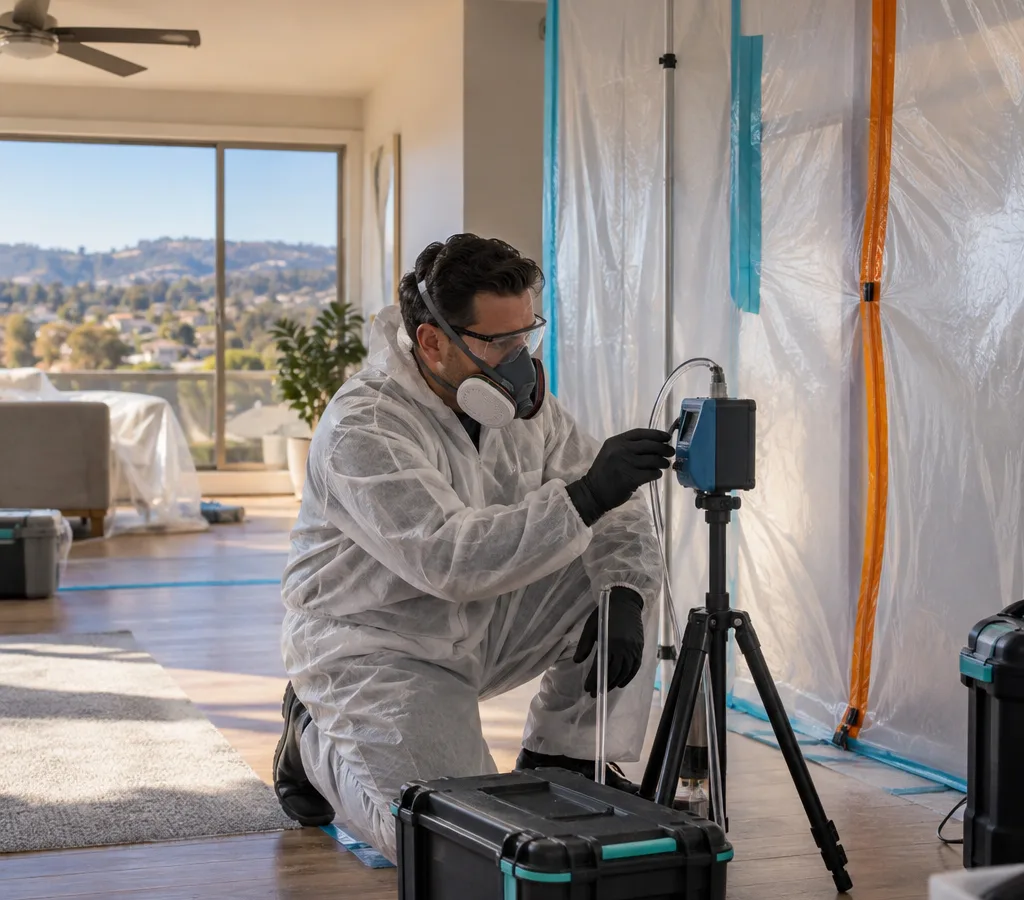
Mold clearance testing in Laguna Hills is the step that verifies a remediation project is ready to close out. It is not another remediation job, and it is not a quick visual glance. A proper PRV combines a detailed visual review, moisture checks where appropriate, and targeted sampling tied to the areas that were actually remediated.
Clearance testing answers practical questions people care about after work is done:
Because Laguna Hills includes a mix of condos, townhomes, and single-family homes, we tailor the verification to your building layout. In attached housing, for example, we pay close attention to shared walls and adjoining spaces so the samples reflect the spaces you actually live in, not just the room that was treated.
If you still need diagnostic testing before any remediation begins, start with mold testing in Laguna Hills so the remediation scope is based on evidence instead of assumptions.
Verification scope
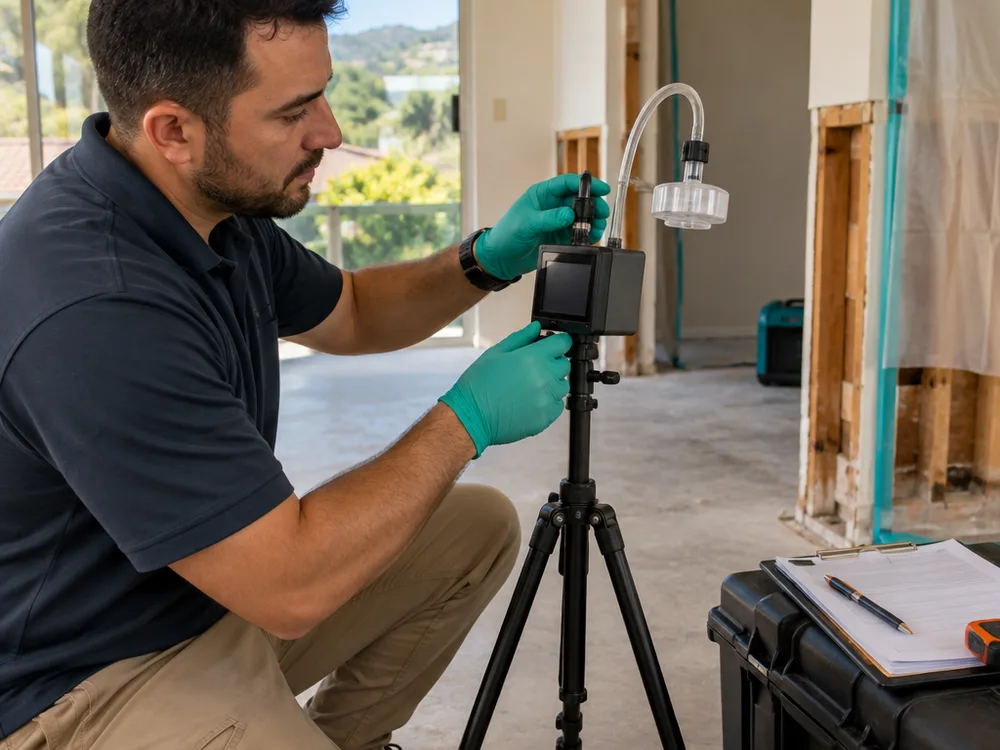
Post remediation verification in Laguna Hills typically includes three parts, documented in a written report.
We check that the remediated area is free of visible mold growth, dust, and debris, and that building materials slated to remain are clean. We also look for staining that may indicate the underlying moisture issue is still active.
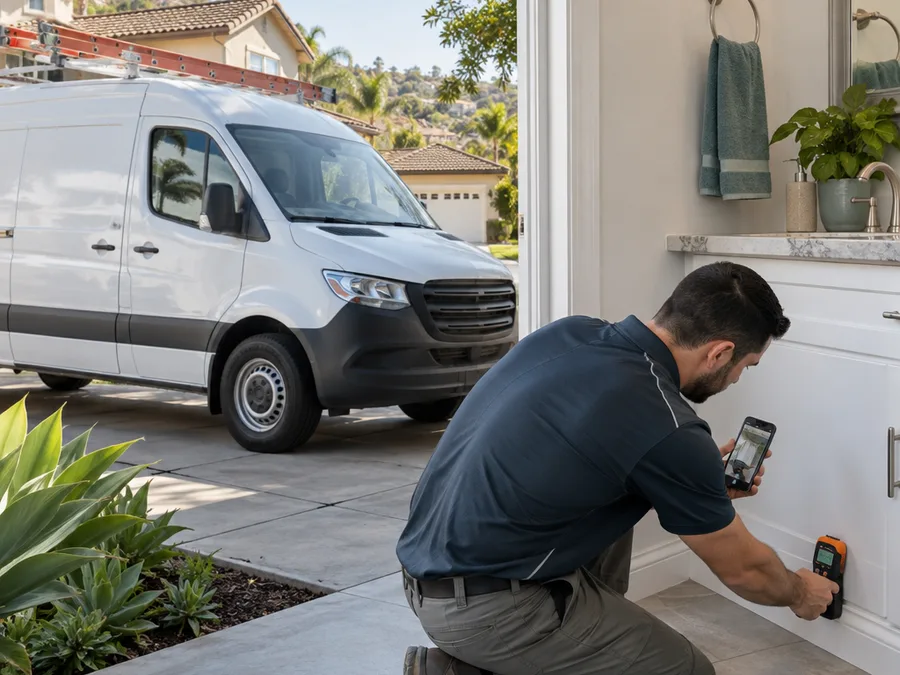
When conditions warrant, we use non-invasive moisture readings to confirm materials are trending dry where the problem occurred. This matters in common local scenarios like slab-adjacent walls, bathrooms with prior leaks, and cabinet bases that were exposed to water.
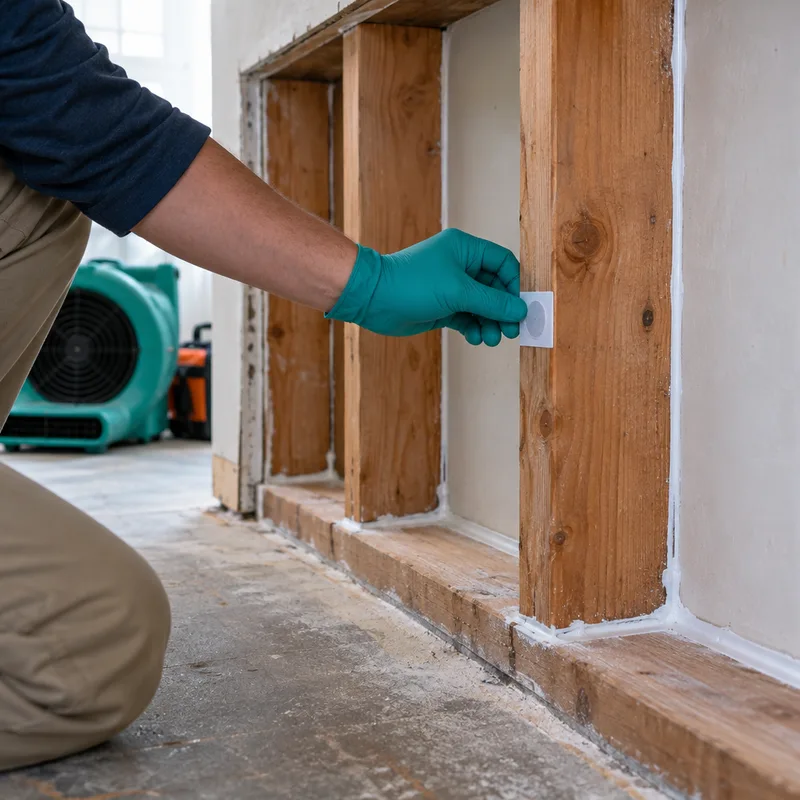
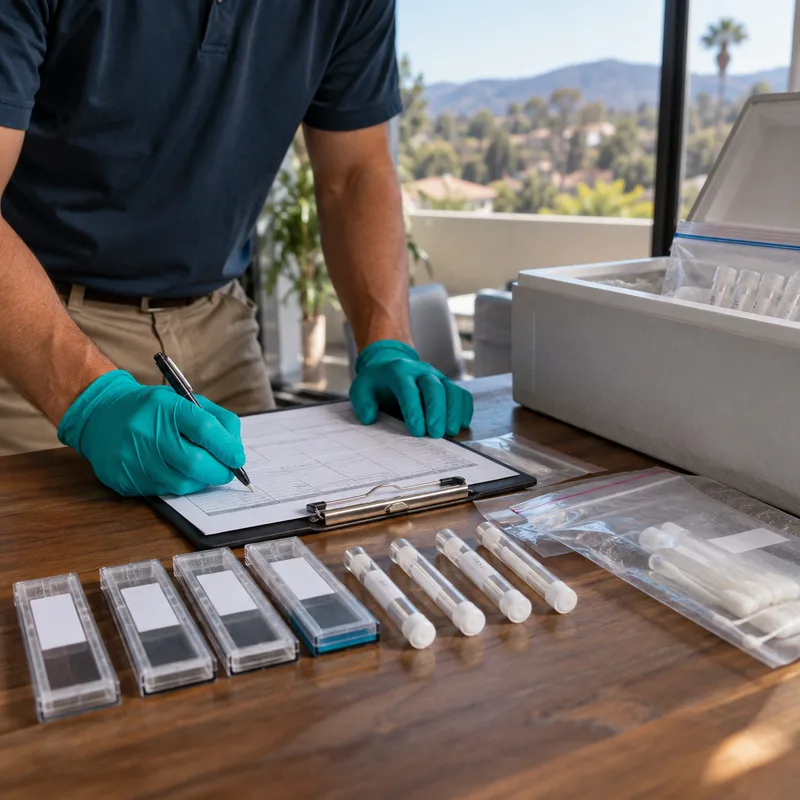
Most clearances use at least one indoor air sample from the work area and one comparison sample, often outdoors or from a non-impacted indoor area depending on the situation. Surface samples may be used to confirm cleanliness of specific locations like studs, sheathing, or framing that remained after removal.
Your results come back from an accredited lab and are interpreted in the context of the project: the areas remediated, the containment approach, the building use, and the sampling locations. If something fails, the report explains what was found and what to correct before retesting.
Independent evidence
Clearance is most defensible when it is performed by an independent party, separate from the remediation crew, with documented methods and unbiased reporting.
We define sampling locations and acceptance criteria up front so the outcome is based on evidence, not a subjective opinion.
Post-remediation failures often come from residual dust, missed surfaces, or incomplete cleaning. Clearance focuses on the details that affect re-occupancy.
A small bathroom containment and a whole-room demo should not have the same sampling approach. The plan should match the scope and risk.
You receive a written PRV report with lab data, sampling map or locations, and notes suitable for landlords, property managers, and real estate transactions.
From completed work to findings
Each step connects the remediation scope, work-area condition, sample locations, and laboratory findings.
We start by confirming what areas were affected, what materials were removed, what remained, and whether any clearance criteria were specified in a protocol or work order.
PRV is most accurate after the remediation team completes cleaning and the area is ready to be turned back over, while containment is still in place when applicable.
We perform a visual inspection of the work area, check adjacent spaces that could be impacted, and look for signs the moisture driver is still present.
Sampling locations are chosen to represent the remediated zone and an appropriate comparison sample. Each sample is labeled, chain-of-custody is documented, and conditions are recorded.
Samples go to an accredited lab. We deliver a report with results, interpretation, and a clear pass/fail recommendation based on the findings and project context.
Pricing context
Mold clearance testing in Laguna Hills typically ranges from $350 to $950 for most residential PRV visits, depending on how many areas need verification and how many samples are required. A straightforward single-room clearance with limited sampling is often at the lower end, while multi-room projects, larger containments, or jobs needing multiple air and surface samples trend higher.
Final price depends on sampling count, the size of the containment or work area, access to an attic or crawlspace, turnaround time, and whether a re-test is needed after corrections. Exact pricing is confirmed after we review the remediation scope and sampling needs.
Documented site conditions
Common homeowner questions
PRV should be performed after the remediation contractor finishes final cleaning and the area is ready to be turned back over, ideally before containment is removed. Testing too early can fail because cleaning is not complete; testing too late can allow normal household dust to re-enter the space and confuse results.
No, but air sampling is common for clearance because it provides a measurable comparison between the work area and an appropriate control sample. Some projects are better served with surface sampling, or both, especially when exposed framing remained in place and cleanliness needs to be verified at specific points.
A mold clearance certificate is typically a written clearance letter or report stating whether the remediated area passed or failed based on the inspection and any lab results. Laguna Hills Mold Testing provides a written PRV report with your sampling results and a clear pass/fail recommendation that you can share with a landlord, property manager, buyer, or contractor.
Failures usually come from incomplete cleaning, a missed reservoir in an adjacent cavity, or an unresolved moisture source that keeps materials damp. In attached housing, air movement between rooms or neighboring units can also complicate results, which is why sampling locations and control selection matter.
Yes, as long as active demolition or dusty work has stopped and final cleaning is complete. For the most meaningful results, the HVAC should be in the intended operating condition for the space, and containment should reflect how the area is being handed back to occupants.
Have the remediation scope or invoice available, confirm what areas were opened and cleaned, and keep the work area accessible, including closets, cabinets, or attic access if they were part of the project. If a written remediation protocol exists, sharing it helps align the clearance criteria with what was specified.
Independent post-remediation verification
Tell us what areas were remediated and when the final cleaning will be complete. We'll recommend a right-sized sampling plan and provide a written clearance report with lab-backed results for your records.