Allergy-like symptoms indoors
If symptoms improve when you leave the house, testing can help separate seasonal outdoor pollen from indoor drivers like dust, spores, or ventilation issues.
Serving Laguna Hills, California & surrounding areas
Mon–Fri 8am–6pm · Sat 9am–2pm
Indoor air quality testing · Laguna Hills, CA
If you are dealing with allergies, musty odors, recent water damage, or a new HVAC install, we help you get clear answers with professional sampling, independent lab results, and a plain-English report you can act on.
Results you can explain
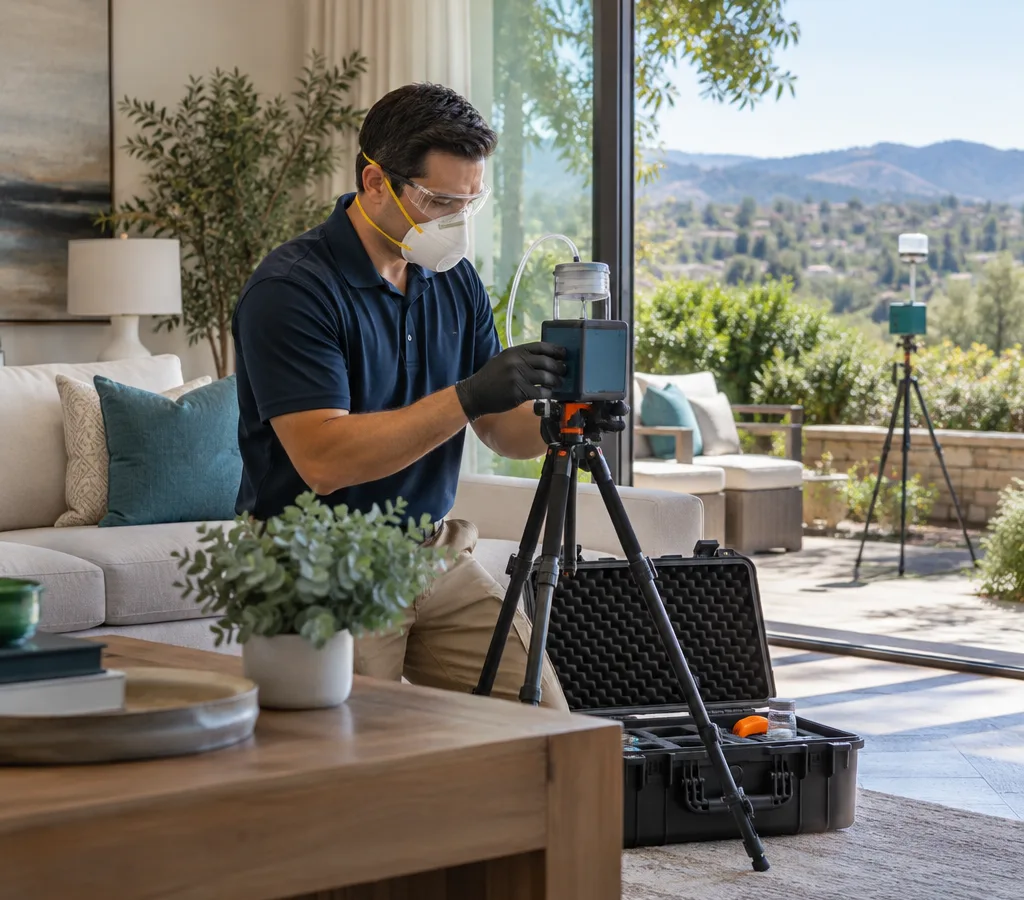
Indoor air quality testing in Laguna Hills is most useful when it produces results you can trust and explain: what was sampled, where, how long, and how it was interpreted. Our IAQ testing is built around that standard. We document sampling locations and conditions, collect air and surface samples as needed, and send them to an independent laboratory for analysis.
A good home air quality assessment in Laguna Hills does more than confirm that “something is in the air.” It helps you understand whether what you are seeing or smelling is likely tied to mold spores, dust and environmental allergens, building materials, or ventilation and moisture conditions. You get a written summary of findings, the lab report, and practical next steps based on what the data shows.
Laguna Hills sits inland from the coast and homes commonly run HVAC much of the year. That combination makes filtration, duct cleanliness, and indoor humidity control matter, especially after a leak or when a home has been closed up for days. Testing does not fix air problems by itself, but it tells you what you are actually dealing with so you can choose the right corrective work instead of guessing.
If your primary concern is mold as a driver of air complaints, our team at Laguna Hills Mold Testing can also coordinate mold sampling and lab testing as part of the same visit when it is appropriate.
Sampling scope
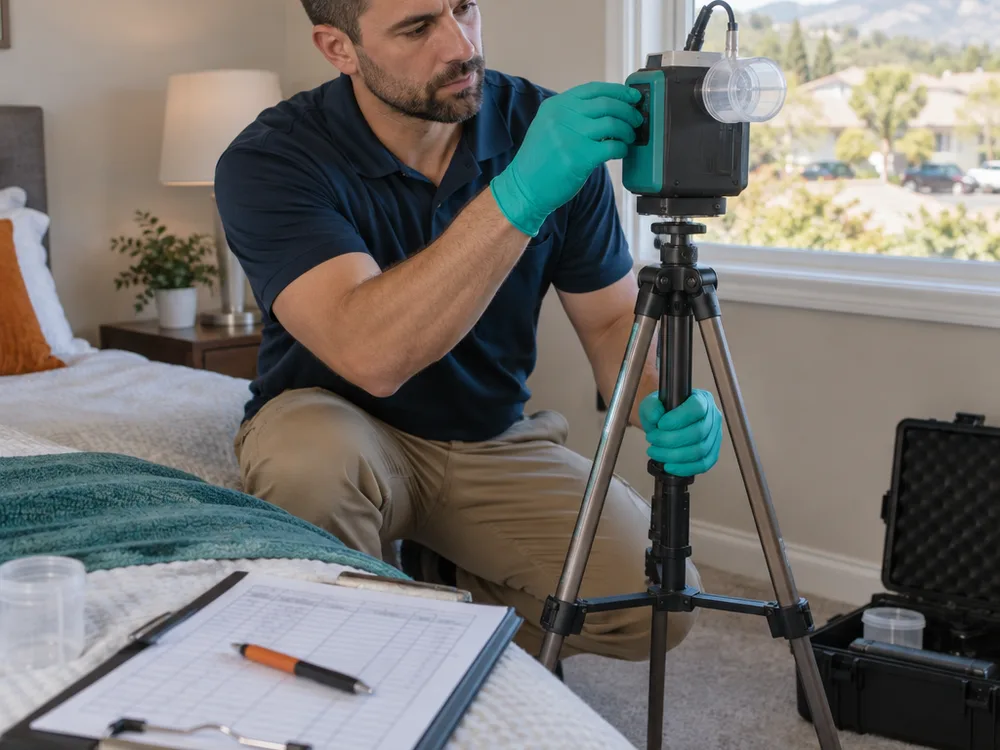
The right sampling plan depends on the complaint and the building. During IAQ testing Laguna Hills homeowners and property managers typically ask for, we focus on evidence that is measurable and comparable.
Common components include:
We take care to sample areas that reflect real exposure: bedrooms, main living spaces, and work areas. If there is a specific concern such as a prior leak under a sink, around a window, or near an air handler closet, we focus additional sampling there so results are useful for decision-making.
You receive the lab report and a clear explanation of what the categories mean, including common outdoor spores versus water-damage indicators, along with next steps if something is elevated.
When testing helps
If symptoms improve when you leave the house, testing can help separate seasonal outdoor pollen from indoor drivers like dust, spores, or ventilation issues.
Odors and window condensation often point to moisture. IAQ sampling paired with observations helps confirm whether conditions are supporting microbial growth.
Even a “small” leak behind cabinets or near drywall can change air quality. Testing is useful when you need to know whether drying and repairs were enough.
For buyers and sellers, results can document baseline conditions or support a plan for addressing a known issue before closing.
Changes in ventilation patterns and new materials can affect comfort. A targeted assessment can identify the likely cause when odors or irritation show up.
From concern to findings
Each visit connects your concerns, the property conditions, documented sampling, independent analysis, and practical next steps.
We start with the symptoms or concern, timing, and any known events like a roof leak, plumbing backup, or HVAC changes. Then we walk the areas that matter most for exposure and note ventilation and moisture conditions.
We choose sample types and locations based on the complaint. That may mean indoor and outdoor air samples, plus surface samples where there is visible growth, settled dust, or a history of dampness.
We collect samples using standard field practices and record locations, conditions, and chain-of-custody details so your lab report is tied to clear context.
Samples go to an independent lab for analysis. Turnaround time depends on the lab and sample types, and we will set expectations before we leave the property.
You get the lab report and a plain-language interpretation. If results point to a likely source area, we outline practical next steps for confirmation, correction, and prevention.
Pricing context
Indoor air quality testing in Laguna Hills typically ranges from about $250 to $750 for most residential situations, depending on how many samples are collected and whether surface sampling is needed. A basic plan often includes 1 to 2 indoor air samples plus an outdoor control, while larger homes or more complex complaints may call for additional rooms and methods.
Final pricing depends on the sampling strategy, property size, access to suspected areas, urgency, and laboratory fees. The exact scope and cost are confirmed during the on-site assessment after we review your concerns and the layout.
Homeowner experiences
“We had a persistent musty smell that would come and go. The testing plan made sense, the report was easy to follow, and having indoor samples compared to an outdoor control helped us feel confident about what to address next.”
“I appreciated that the results were from an independent lab and not just someone giving an opinion on-site. The explanation of what the spore categories meant was straightforward.”
Common homeowner questions
Most on-site IAQ assessments take about 45 to 90 minutes, depending on the number of rooms and samples. A straightforward visit with a few air samples moves quickly, while a property with multiple concern areas, limited access points, or added surface sampling takes longer.
For most indoor air quality testing, yes, we collect an outdoor control sample at the same time as indoor sampling. Outdoor conditions strongly influence what appears in air results, and the indoor vs. outdoor comparison is one of the most useful ways to interpret whether indoor air looks unusual for that day.
Testing can narrow the likely source by showing which rooms or zones have higher readings and by identifying spore types or surface growth. Pinpointing the exact source still depends on building observations and, in some cases, follow-up investigation of a wall cavity, ceiling, or HVAC area.
Yes, airflow changes can affect indoor air readings, which is why we document conditions at the time of sampling. Before sampling, we will ask about recent ventilation, air purifier use, and HVAC operation so we can choose the best approach for results that match your real living conditions.
Yes, IAQ testing can be appropriate for offices, small retail, and other commercial interiors, especially when employee complaints, odors, or a history of leaks are involved. The sampling plan usually focuses on occupied zones, HVAC supply/return areas, and any spaces with known moisture events.
Start by using the report to guide correction, not just cleanup. Elevated indoor results typically mean you should address moisture sources, improve ventilation or filtration where appropriate, and remove affected materials if growth is confirmed. After corrective work, follow-up testing can verify whether indoor air has returned to a reasonable baseline compared to the outdoor control.
Independent analysis for your property
Tell us what you are noticing and where it is happening. We will recommend a sampling plan that fits the property and provide independent lab results with a report you can use to decide next steps.