Moisture source and pathway check
We document the likely path water took—gravity, wicking, and capillary movement—so the scope matches how water actually spread, not just where staining shows.
Serving Laguna Hills, California & surrounding areas
Mon–Fri 8am–6pm · Sat 9am–2pm
Water-damage mold testing · Laguna Hills, CA
If you have had a leak, overflow, or flooding, testing quickly is the best way to confirm whether mold is developing, how far moisture traveled, and what needs to happen next to protect your home or business.
Evidence after a water event
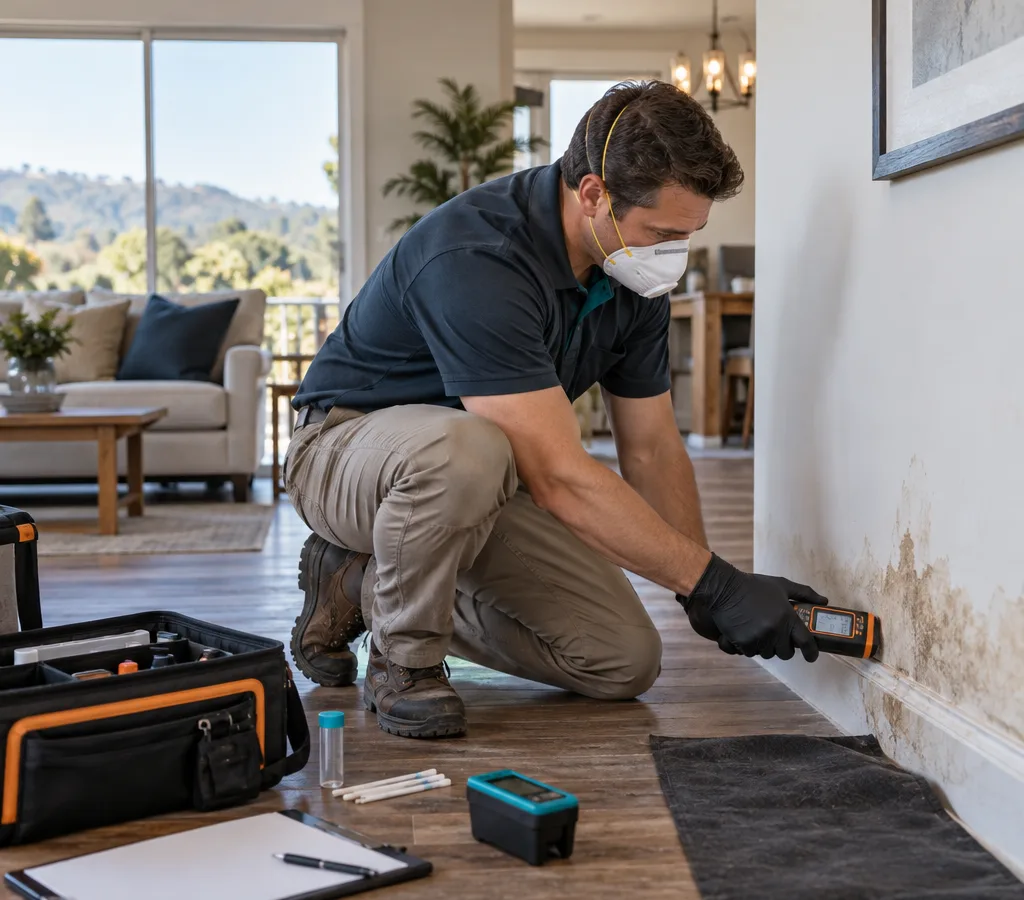
Mold testing after water damage in Laguna Hills is about answering a practical question: did water get into materials in a way that can support growth, and if so, where? Visible staining is not a reliable indicator of what is happening behind drywall, under baseboards, or beneath flooring.
In South Orange County homes, water damage often comes from plumbing leaks, water heater failures, AC condensate line issues, toilet overflows, shower pan leaks, or rain intrusion around windows and sliding doors. Any of those can leave moisture trapped in building cavities where airflow is limited. Testing and moisture mapping help you decide whether you are dealing with a simple dry-out, a targeted removal, or a larger remediation plan.
If you want a broader look at sampling options and what lab results mean, start with certified mold lab testing and then use this service when water damage is the trigger event.
Inspection scope
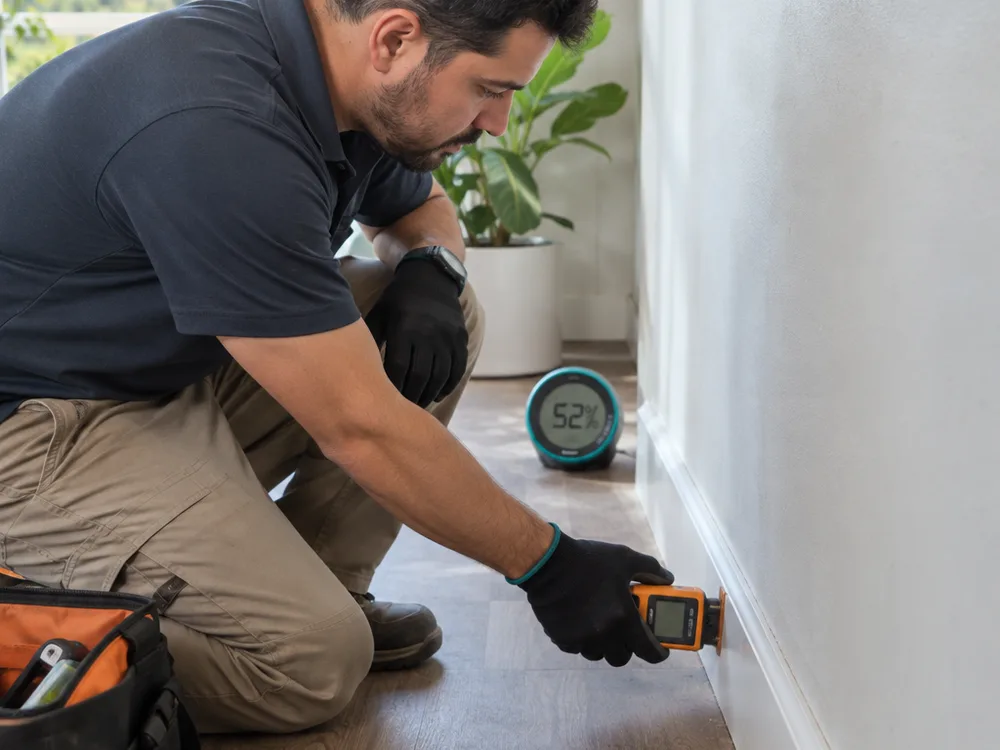
Post flood mold testing in Laguna Hills starts with understanding the water event and the materials affected. Floodwater and overflows can push moisture into places you cannot see, and the goal is to document conditions the same day we are on-site.
Typical inspection and testing elements include:
If the water event involved sewage or contaminated water, the priority is health and containment. Testing still helps, but it must be paired with correct handling and cleaning decisions. We will explain what the inspection supports and what it cannot prove, so you have a defensible plan rather than guesses.
Leak assessment details
We document the likely path water took—gravity, wicking, and capillary movement—so the scope matches how water actually spread, not just where staining shows.
Drywall, insulation, cabinets, and wood framing behave differently after water exposure. We note which materials are most likely to trap moisture and support growth.
If sampling will not change the next step, we say so. When it will, we collect the right sample type and placement for meaningful results.
You get documentation you can share with a property manager, contractor, or insurance adjuster to support next steps.
We explain what to dry, what to open up for inspection, and what should be handled under proper containment if microbial growth is suspected.
From water loss to findings
Each step connects the water event, building evidence, sampling decisions, and laboratory findings.
We ask when the water event happened, what rooms and materials were affected, and what has already been done with fans, dehumidifiers, or tear-out. Timing and prior drying efforts change what we test and how results are interpreted.
We inspect impacted areas and adjacent spaces, map moisture readings to locate hidden dampness, and check conditions that contribute to growth, including elevated indoor humidity.
If sampling is warranted, sample types and locations are tied to a decision: confirm or rule out amplification, compare with an unaffected area, or identify suspect surfaces. Clean handling practices help prevent cross-contamination.
Samples go to a certified lab for analysis. Once results are available, we provide written findings and a clear explanation of what they mean for the impacted areas.
We explain practical options based on findings, including whether further investigation—such as opening a small access area—is needed and what to address first to stop moisture from feeding growth.
Pricing context
Mold testing after water damage in Laguna Hills typically ranges from about $350 to $950+, depending on the size of the impacted area, the number of rooms involved, and how many samples are needed. A limited leak assessment with a small number of samples is usually on the lower end, while multi-room water losses or larger homes with multiple sampling locations trend higher.
Final pricing depends on accessibility, including crawlspaces and tight cabinetry, whether a comparison sample is recommended, how much moisture mapping is required, and how quickly lab results are needed. The exact cost is confirmed after the on-site inspection and an agreed sampling plan.
“We had a slow leak under the kitchen sink that went into the cabinet base. The inspection showed moisture farther out than we expected, and the report helped us decide what actually needed to be opened up and dried.”
“After a toilet overflow, I wanted proof the area was clean and dry before we put the new flooring in. The moisture readings and lab results gave us a clear direction instead of guessing.”
Common homeowner questions
As soon as the water is stopped and it is safe to enter the area, because the inspection is most useful before materials are covered back up or fully dried without documentation. Early moisture mapping shows the true wet zone and helps guide what should be dried, opened, or monitored.
No. Air sampling is used when it answers a specific question, such as whether an impacted room differs from an unaffected area or whether conditions suggest hidden amplification. In some situations, moisture mapping and targeted surface sampling provide clearer decision-making than an air test alone.
You can still test, but it changes the snapshot we are measuring. Drying equipment can reduce airborne spores and surface moisture readings, so we document what equipment ran, for how long, and where it was placed to interpret results correctly and decide if additional investigation is needed.
Testing can strongly indicate risk, but it cannot guarantee what is inside a sealed cavity without access. Moisture readings, thermal cues, odor, and targeted sampling can justify a small, controlled inspection opening when the findings point to trapped moisture.
Yes. Water category matters because it affects cleanup requirements and how surfaces should be handled. Even with clean water, materials can support microbial growth if they stay wet; with contaminated water, proper protective controls and cleaning decisions become urgent regardless of mold test results.
Yes. You receive a written report that summarizes observations, moisture findings, sample locations if collected, and lab results when applicable. This type of documentation is helpful when coordinating next steps with an adjuster, landlord, or contractor.
Document the impact before repairs
Laguna Hills Mold Testing can inspect the affected areas, map moisture, and recommend a sampling plan that matches the water event. Share what happened and what spaces were impacted, and we will help you confirm the right next step for your property in Laguna Hills, CA 92654.