Airborne spore screening
Air samples can show whether spores are elevated indoors compared with a control and help prioritize rooms for deeper investigation. Results are paired with moisture data and building history.
Serving Laguna Hills, California & surrounding areas
Mon–Fri 8am–6pm · Sat 9am–2pm
Black mold testing · Laguna Hills, CA
If you have a musty odor, recent leaks, or visible growth, a targeted inspection and lab-confirmed results can tell you what you are dealing with and where it is coming from.
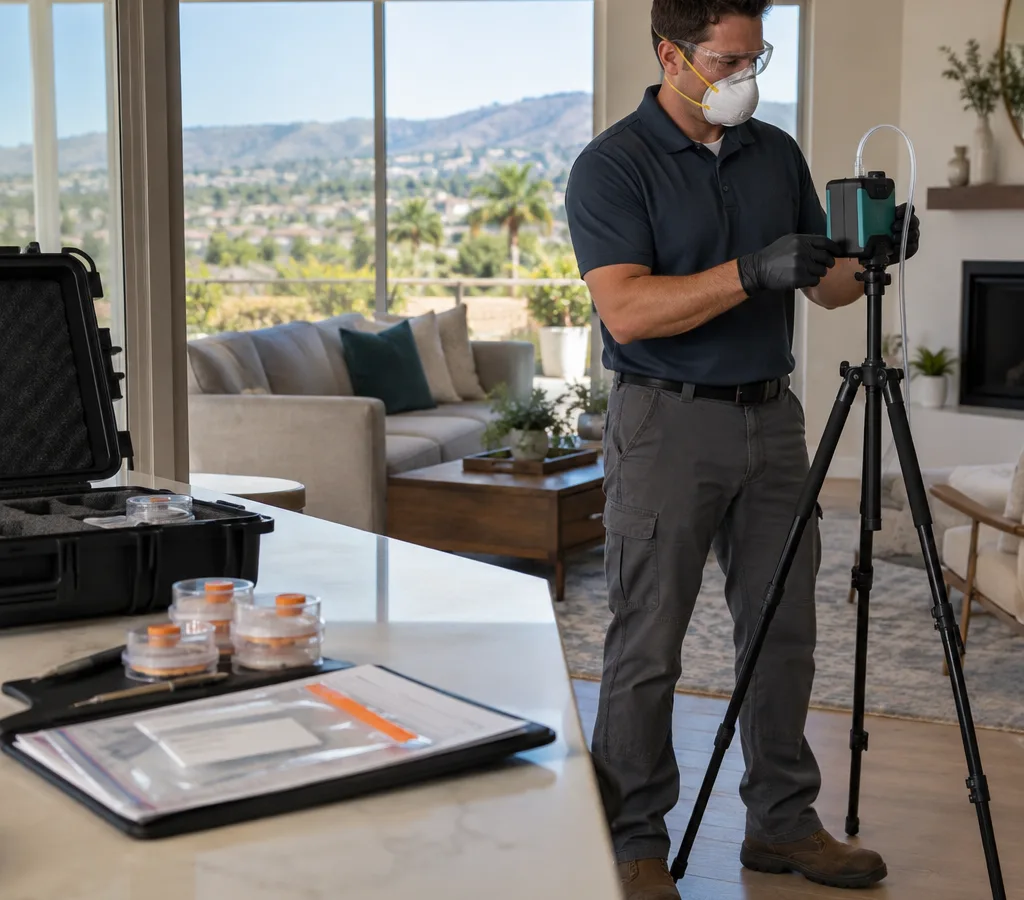
Sampling and documentation for laboratory analysis.
Black mold concerns often begin with an odor, indoor symptoms, staining, or growth that returns after cleaning. Lab-backed testing replaces suspicion with documented findings.
Evidence before decisions
Laguna Hills Mold Testing focuses on toxic mold inspection in Laguna Hills for homes, condos, and small commercial spaces. We look for the moisture source first, verify conditions with field measurements, and confirm findings with lab-processed samples.
That combination helps you decide what should happen next, whether that means targeted cleaning, containment by a remediation firm, or follow-up clearance testing.
Reliable certified mold lab testing depends on a sound sampling strategy, clear documentation, and an actionable report. The inspection is built around your building, your concerns, and the specific places mold grows in real structures.
Inspection scope
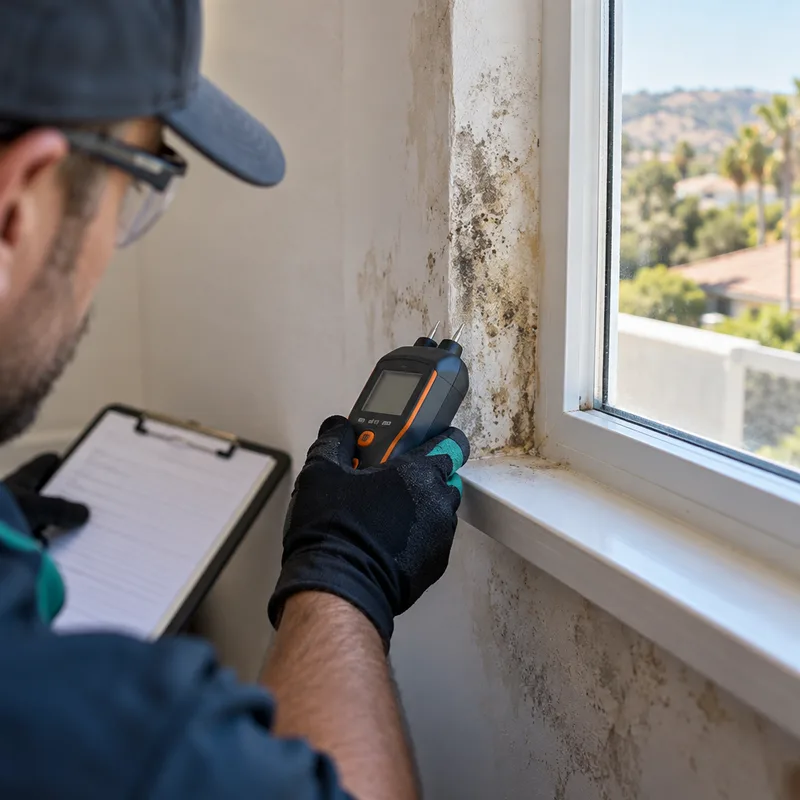
A good inspection is more than taking a random air sample in the middle of a room. Our approach treats mold as a moisture-and-building problem, then uses sampling to confirm what is present.
Typical scope includes:
You receive clear next steps based on field observations and laboratory findings. Photos and sample locations are documented so the results are usable by a remediation contractor or property manager.
Testing details
Air samples can show whether spores are elevated indoors compared with a control and help prioritize rooms for deeper investigation. Results are paired with moisture data and building history.
Surface sampling can identify growth on drywall, framing, or caulk and determine whether it includes organisms associated with chronic water damage. It also helps distinguish mold from soot or dirt.
Problems can sit inside wall cavities, under vanities, behind baseboards, or at HVAC components. Odor tracing, moisture patterns, and targeted checks guide sample placement.
Sample locations and conditions are documented so you can request accurate bids, support property-management decisions, or retain records when needed.
Testing does not remove mold. It identifies what is present and where to focus, helping define containment expectations and appropriate post-work verification when remediation is needed.
From concern to findings
The inspection connects your concern, the building evidence, the sampling strategy, and the laboratory findings.
We begin with what you need to answer: confirm suspected black mold, find a post-leak source, check a particular room, or document conditions for a tenant or real estate matter.
We walk the space, inspect complaint areas, and take targeted moisture readings. For HVAC concerns, we note airflow and likely condensation points around vents and returns.
Samples are selected from building evidence, not a template. Air samples use a calibrated pump, while tape lifts or swabs are used where surface sampling is appropriate, with careful labeling and chain-of-custody documentation.
Samples go to an accredited laboratory. Results are interpreted alongside the building conditions, moisture data, and reported concerns so you are not left with an unexplained organism list.
You receive photos, sample locations, and practical recommendations. When remediation is indicated, the findings help clarify affected areas and appropriate post-remediation verification.
Pricing context
Black mold testing in Laguna Hills typically ranges from about $325 to $850 for most homes, depending on how many rooms are checked and how many samples are collected. A focused inspection with one or two samples often falls toward the low end, while larger homes or multiple suspected areas cost more.
Final pricing depends mainly on air and surface sample count, access to attics, closets, or crawlspaces, the extent of visible growth requiring mapping, and whether documentation is needed for a real estate or tenant matter. Exact cost is confirmed at the inspection after the sampling plan is set.
If you suspect toxic mold, a documented inspection with lab-confirmed results is the fastest way to move from worry to a clear plan for the building.
Get Your Free QuoteCommon homeowner questions
Yes, but only laboratory analysis can confirm whether suspected black growth includes Stachybotrys or another dark-colored mold. Many molds look black or greenish-black, so targeted surface results are interpreted with moisture readings and building history.
Air testing helps, but it is not always sufficient by itself. Hidden growth may not appear clearly in one air sample, so air sampling is paired with moisture mapping and, when appropriate, surface sampling near the suspected source.
Most lab results are returned in a few business days, depending on the laboratory method and number of samples. Sample locations and conditions are documented on-site so results can be interpreted efficiently when the report arrives.
We prioritize the complaint area and likely moisture pathways: under sinks, behind toilets, around showers and tubs, near windows, at laundry hookups, and wherever staining or swollen drywall appears. After a leak, we follow the water path rather than inspecting only the visible discoloration.
Testing can guide the decision by identifying active growth and affected areas, although material removal also depends on material type and water-damage extent. Written findings help a remediation contractor scope containment and material handling.
With obvious widespread growth and a known source, you may choose to proceed directly to remediation. Testing is especially useful when the source is unclear, growth recurs, the area is small, or documentation is needed to avoid over-remediation or coordinate with property management.
Yes. Post-remediation verification commonly includes visual confirmation that affected materials were addressed, along with clearance-style sampling when appropriate. The goal is to verify that the contained area aligns with expected indoor conditions after drying and cleaning.
Lab-backed findings for your property
Share what you are seeing and where it is happening. We will recommend an inspection and sampling plan that fits the situation and gives you lab-backed results you can act on.